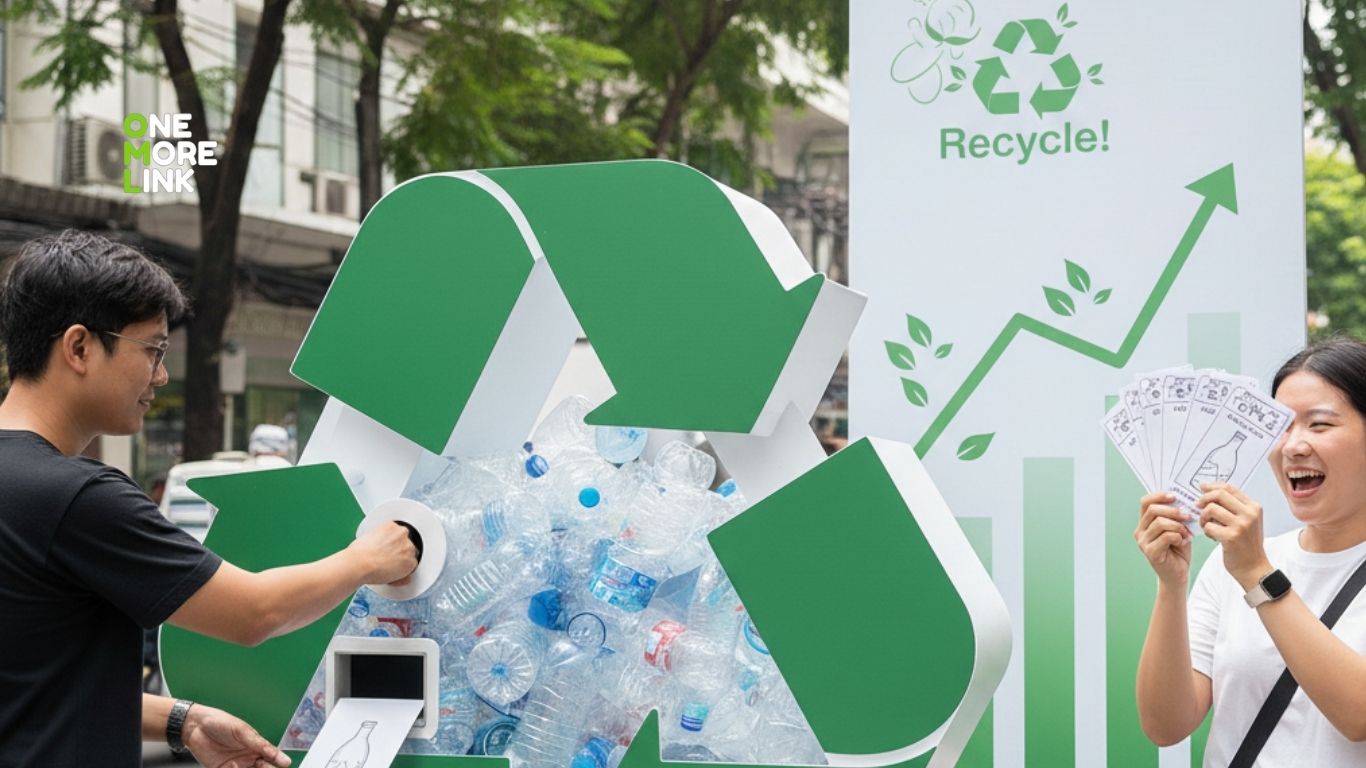
The “Garbage Lottery” is an innovative concept that leverages human risk-taking behavior to address environmental challenges. A study from Canada, published in the journal Waste Management, tested this idea by offering participants a choice between a small guaranteed refund and a lottery ticket for a larger prize. The results showed that most people preferred the lottery option, leading to a significant 47% increase in recycling rates.
This phenomenon is explained by a psychological concept known as “anticipatory happiness,” which refers to the excitement and motivation people feel when anticipating a potential reward. This emotional response often outweighs the appeal of small but certain returns. By transforming recycling into an activity that is engaging and rewarding, participation can be significantly increased.
This model is not purely experimental—it has already been successfully implemented in countries like Norway, where it has contributed to highly efficient waste management systems. The approach highlights that solving environmental issues does not always require complex or rigid policies, but can instead benefit from a deeper understanding of human behavior.
If applied in Thailand—such as through reverse vending machines that offer lottery-based incentives—this concept could help boost recycling rates, reduce waste, and contribute to long-term environmental sustainability.
Cr. Uncle Saleng and the Missing Garbage