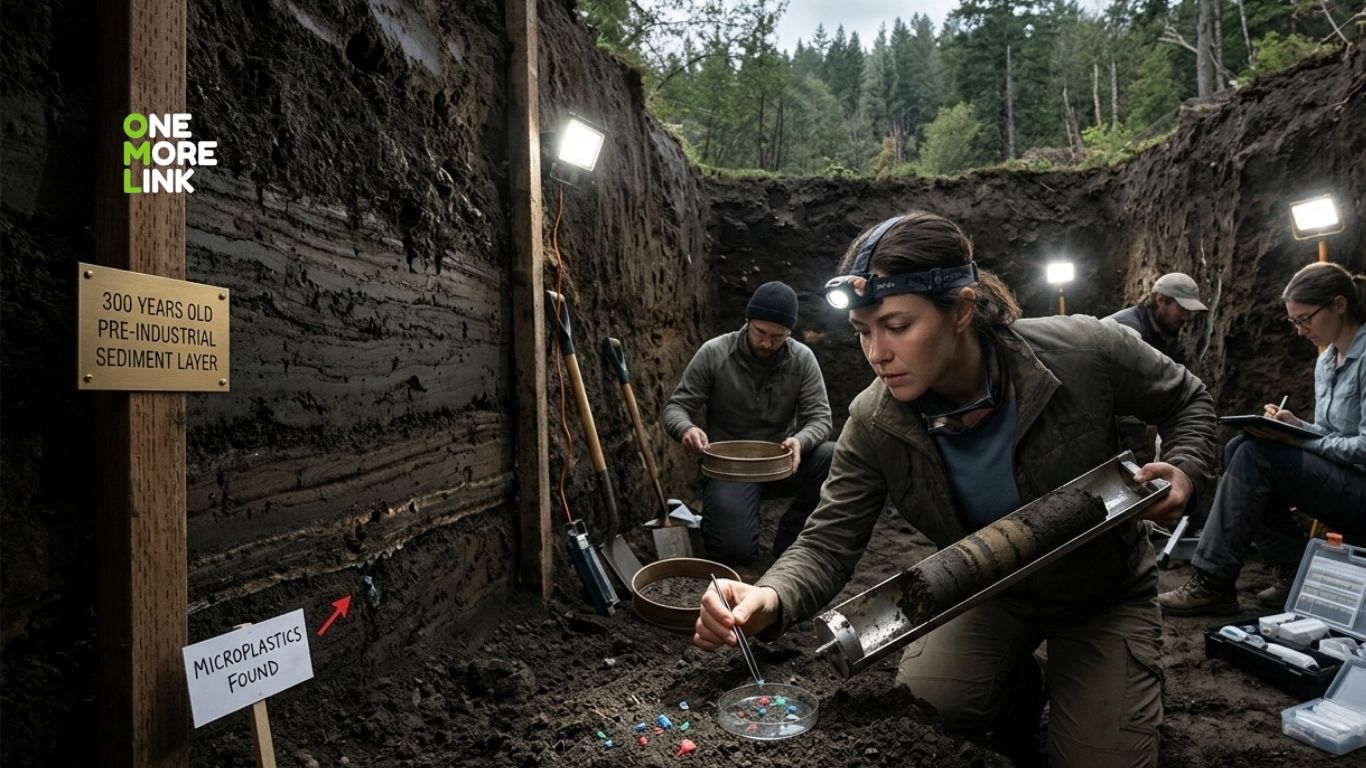
A recent discovery by European researchers is reshaping our understanding of plastic pollution. Microplastics have been found in lake sediment layers in Latvia dating back to the early 1700s—long before the industrial production of plastic began.
What makes this finding even more striking is that these sediment layers were undisturbed by modern human activity. This suggests that microplastics may have spread through the environment in ways that are far more complex than scientists previously believed.
The discovery also raises important questions about the use of microplastics as a marker for the beginning of the Anthropocene—the era defined by significant human impact on Earth. If microplastics existed earlier than assumed, the scientific timeline may need to be reconsidered.
Today, microplastics are no longer confined to oceans. They have been detected in the air we breathe, in Antarctic snow, and even within the human body—highlighting the global scale of the issue.
While many questions remain about their origins and long-term health effects, scientists around the world are actively studying how these particles move through the environment and exploring new technologies to filter and reduce contamination.
This discovery is not just about the past—it is a warning signal for the environmental future we all share.
Cr. hashem.alghaili