Every year, workers lose their lives in confined spaces without warning. The main reason is not a lack of caution, but a misunderstanding of the risks—many assume it’s just a low-oxygen environment, when in reality, toxic gases may be present and completely invisible.
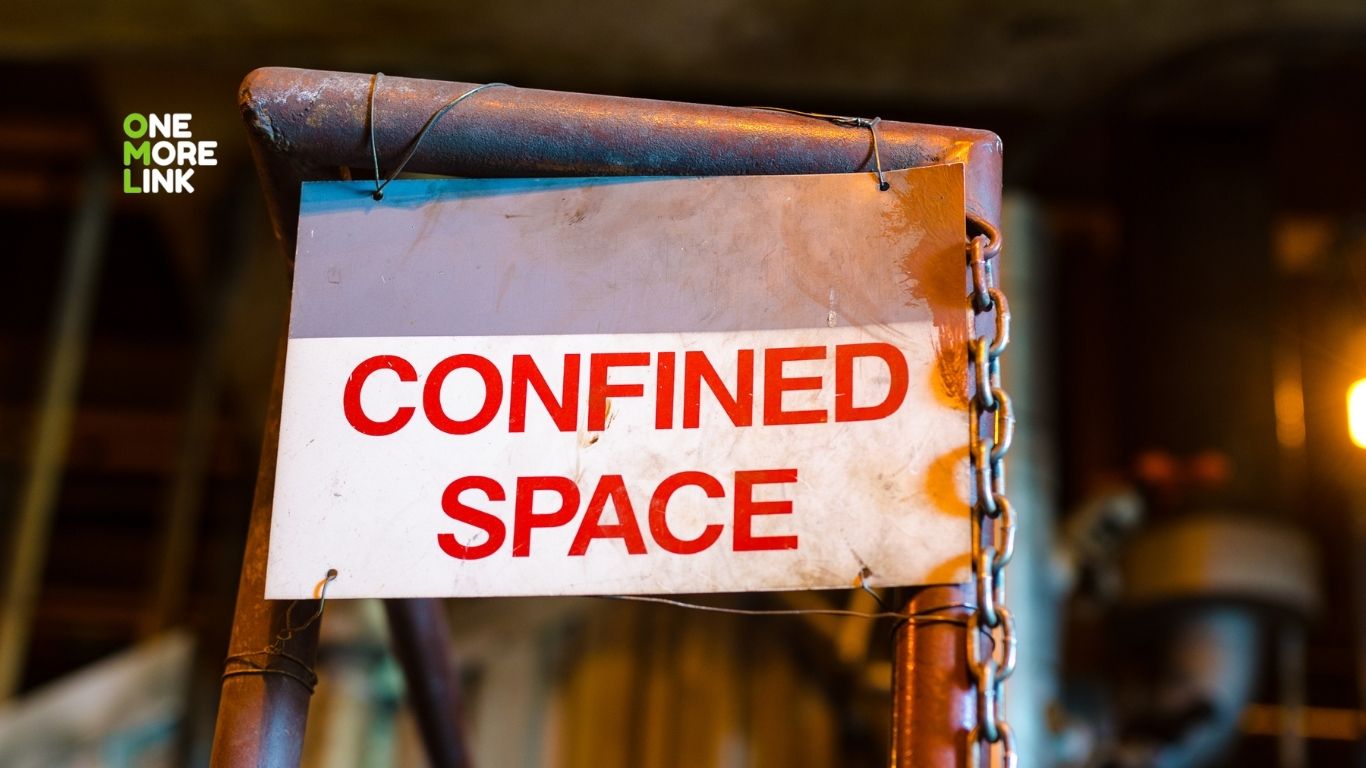
A confined space is an area with limited entry and exit, and poor ventilation. Examples include water tanks, wastewater pits, pipelines, silos, and basements. These environments can contain hazardous gases such as hydrogen sulfide (H₂S) or carbon monoxide (CO), as well as dangerously low oxygen levels that can lead to unconsciousness or death within minutes.
Due to these serious risks, safety regulations clearly define required precautions. Workers must be properly trained and certified by authorized organizations. A confined space supervisor must be present, air quality must be tested before entry, and rescue equipment must be readily available at all times.
At One More Link, safety is our top priority. All employees are certified for confined space operations and undergo annual health check-ups. Every team is equipped with gas detectors, supervised by qualified personnel, and supported by comprehensive emergency plans and rescue equipment.
Because in environments where dangers are invisible, safety is not about courage—it’s about standards.