#OneMoreLink #Environment #IndustrialWaste #IndustrialWasteDisposal #WasteManagementCompany
Every time you turn on a light at home, there is a possibility that waste from a nearby trash bin has helped generate that electricity.
It may sound like science fiction, but it is already happening in Thailand and around the world. The waste we throw away every day does not always end up in a landfill. Some of it is transformed into energy that powers industrial facilities and supplies electricity to local communities.
The technology that makes this possible is called RDF.
What Is RDF?
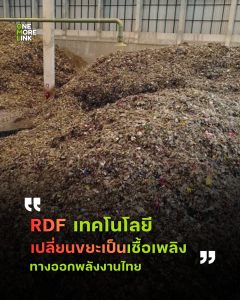
RDF (Refuse Derived Fuel) is a fuel produced by processing and upgrading municipal or industrial solid waste into a solid fuel with suitable heating value, moisture content, particle size, and density for use in boilers to generate heat and electricity.
By converting waste into fuel, RDF helps reduce the amount of waste sent to landfills while creating a valuable alternative energy source.
Advantages of RDF
RDF offers several benefits:
✓ High heating value, comparable to many biomass fuels
✓ Low moisture content, improving combustion efficiency
✓ Easy storage, handling, and transportation
✓ Lower environmental impact compared to traditional disposal methods
✓ Suitable for producing both thermal energy and electricity
✓ Supports sustainable waste management and resource recovery
Types of RDF
RDF can be classified into seven categories (RDF-1 to RDF-7) based on processing methods, fuel size, composition, and calorific value.
These classifications provide flexible options for both waste management and energy production, helping address growing energy demands while reducing waste disposal challenges.
Why Is RDF Becoming More Popular?
Imagine a factory reducing its coal consumption by 20–30% by partially substituting RDF as a fuel source. At the same time, it contributes to a significant reduction in landfill waste.
RDF is typically sold at approximately 500–1,200 THB per ton, depending on quality and heating value, which generally ranges between 3,000 and 5,000 kilocalories per kilogram. This makes RDF a cost-effective alternative to coal in many applications.
In addition, RDF plays an important role in managing municipal solid waste and certain types of non-hazardous industrial waste that are difficult to separate or recycle.
Waste is no longer just something to discard.
With the right technology and management approach, it can become a valuable energy resource that supports both industry and sustainability.
One More Link — Connecting Every Opportunity to a Sustainable Future
Source: https://onemorelink.co.th/