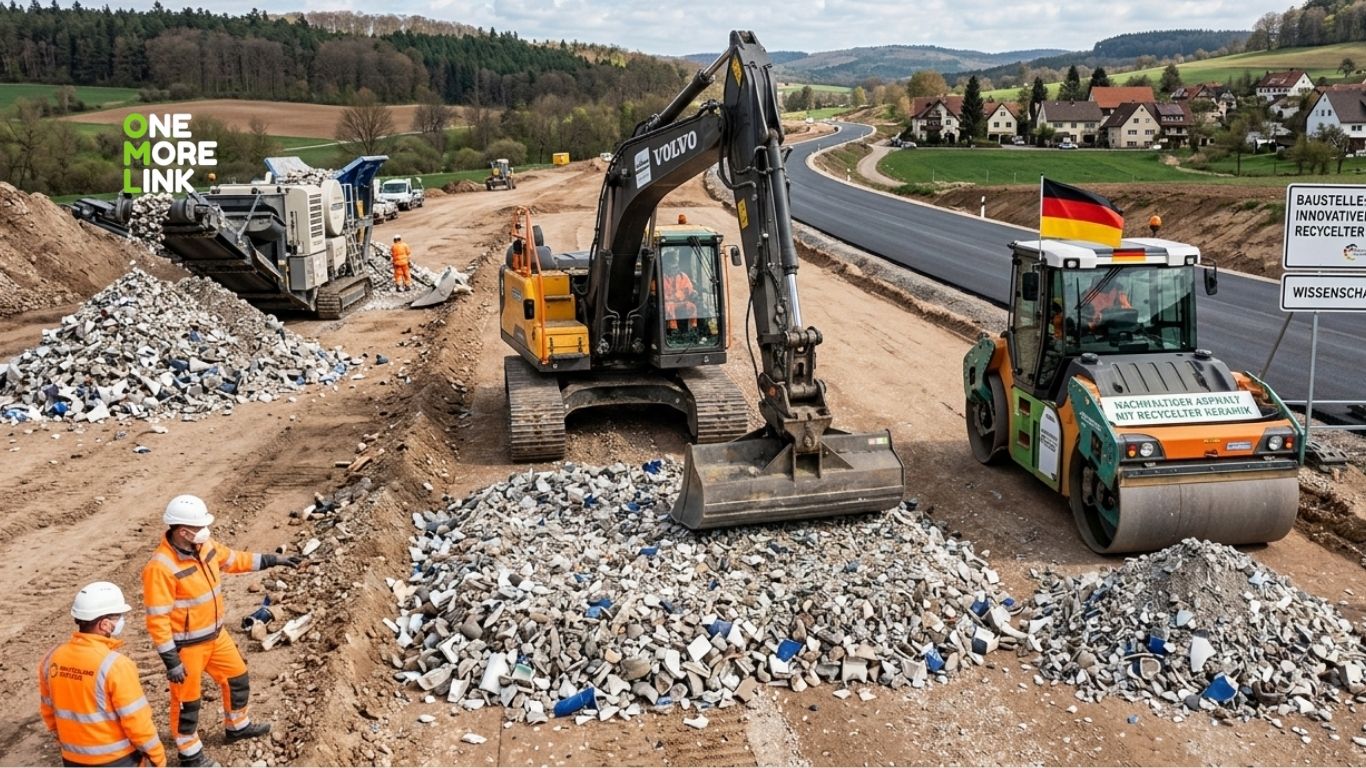
As the world faces growing challenges of waste management and resource depletion, Germany is demonstrating a new approach to infrastructure development by transforming discarded ceramic sanitary ware—such as toilets and sinks—into valuable road construction materials.
These ceramic materials are crushed into fine particles to create “aggregate,” a key component in road construction. The processed material is then mixed into asphalt or used in base layers to enhance structural strength. Thanks to the inherent properties of ceramics—high hardness, chemical resistance, and long lifespan—the resulting roads are more durable, less prone to cracking, and more stable.
This innovation not only improves road quality but also significantly reduces construction waste sent to landfills. At the same time, it lowers the demand for natural resources like sand and gravel, whose extraction often harms the environment.
The approach reflects the principles of a circular economy, where waste is reimagined as a resource. It highlights how rethinking existing materials can lead to more sustainable and efficient solutions.
In the future, the roads we travel on may not rely solely on new materials, but on giving a second life to what was once considered waste.
Cr. unclemcreatives