#OneMoreLink #Environment #IndustrialWaste #IndustrialWasteDisposal #WasteManagementCompany
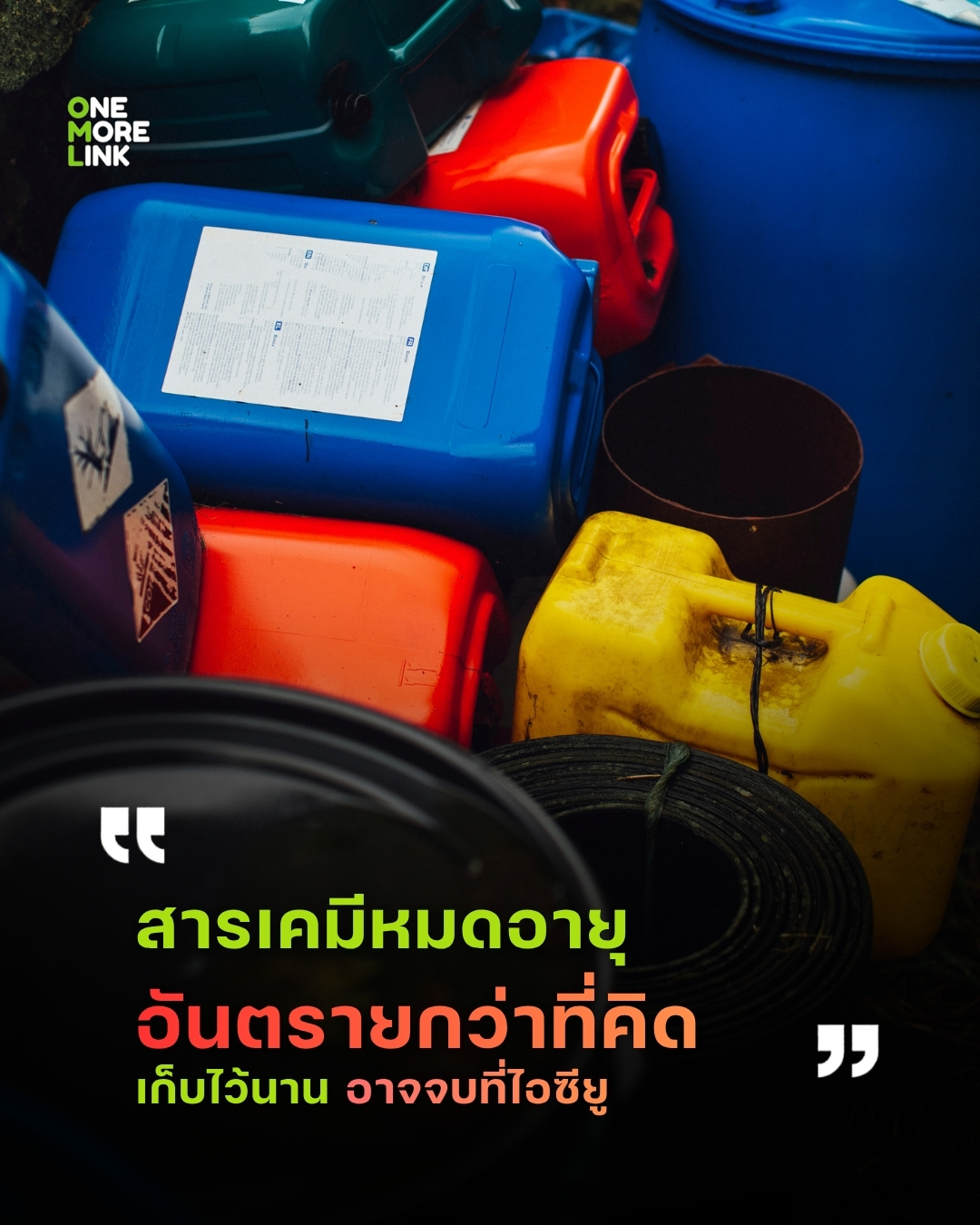
How confident are you that the chemicals stored in your facility are still safe to use?
If your answer is, “They should be fine,” that uncertainty could be the starting point of an accident no one wants to document in an incident report.
Every year in Thailand, industrial facilities experience fires, chemical leaks, and worker injuries. A significant number of these incidents can be traced back to one of the most preventable causes: expired chemicals that remain forgotten on storage shelves.
Expired Chemicals Don’t Just Stop Working — They Can Become New Hazards
One common misconception is that deteriorated chemicals simply become ineffective.
In reality, chemical degradation can alter molecular structures and create entirely new risks. Some substances may accumulate explosive compounds, while others can generate toxic gases without any visible warning signs.
Examples Every Safety Officer Should Know
Old Diethyl Ether
→ Can accumulate peroxide compounds over time. A simple shake or forceful opening of the container may trigger an explosion.
Chloroform Exposed to Light
→ Can decompose into phosgene, a highly toxic gas that was used as a chemical warfare agent during World War I.
Acids and Bases Stored in Degraded Containers
→ Containers may weaken and corrode, leading to leaks without obvious warning signs until an incident occurs.
Even more concerning, if a degraded chemical changes composition, the Safety Data Sheet (SDS) you rely on may no longer accurately represent the substance inside the container.
Think Disposal Costs Are Expensive?
Consider the true cost of an accident.
The cost of legally disposing of expired chemicals may be relatively small, but the consequences of an incident can include:
• Medical expenses for injured employees (ranging from hundreds of thousands to millions of baht)
• Fines under hazardous substances and environmental regulations
• Criminal liability for safety officers and company executives
• Long-term damage to the company’s reputation and stakeholder trust
As a Safety Officer, your responsibility goes beyond regulatory compliance.
You are protecting yourself, your colleagues, and everyone within the facility.
Take Action Before It Becomes a Problem
Open your chemical inventory records today.
Ask yourself:
- Does every chemical have a clearly documented expiration date?
- Are storage conditions being monitored and maintained?
- Are expired chemicals identified and segregated?
If the answer is no, make it your priority before the end of the month.
If expired chemicals are found:
✓ Segregate them immediately
✓ Clearly label them as expired
✓ Arrange disposal through a licensed and authorized waste management provider
Don’t let aging chemicals make decisions for you.
Take action before they become an emergency.
One More Link — Connecting Every Opportunity to a Sustainable Future
Source: https://onemorelink.co.th/