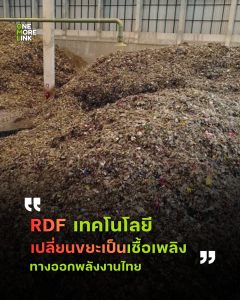
#OneMoreLink #Environment #IndustrialWaste #IndustrialWasteDisposal #WasteManagementCompany
“Recyclable waste can be sold or disposed of without any problem.”
Are you still thinking this way?
That mindset could put a Safety Officer at serious legal risk.
Many factories assume that waste with resale value or recyclable materials are no longer their responsibility once a scrap dealer comes to collect them.
But legally, the responsibility does not end there.
Thai law does not focus only on whether the waste is “sellable” or “discarded.” What matters is whether it is managed correctly.
The Hazardous Substances Act B.E. 2535, the Factory Act B.E. 2535, as amended in B.E. 2562, and the Enhancement and Conservation of National Environmental Quality Act B.E. 2535 cover all types of industrial waste, including recyclable waste.
What you need to know:
- Transporting scrap metal without a Manifest is an immediate legal violation, even if it is sent to a legally licensed recycler.
- Hiring a general scrap dealer to collect industrial waste does not remove the factory’s responsibility if the waste is improperly disposed of at the destination.
- If recyclable waste is mixed with hazardous waste, it may immediately become hazardous waste, increasing disposal costs by 5–10 times.
- Failure to report through the e-Manifest system may result in penalties for every missed shipment.
Most importantly, under Section 85 of the Hazardous Substances Act, Safety Officers who knowingly allow or consent to violations may share criminal liability with the company — not merely receive a warning.
Recyclable waste has value, but that value can disappear instantly if it is managed incorrectly.
Factories with proper waste management systems benefit in three ways:
1. Revenue from Waste Sales
Scrap metal, plastic, paper, and used oil all have market value and can become legitimate additional income.
2. Reduced Disposal Costs
Waste that is correctly separated from the beginning does not need to be managed at hazardous-waste disposal rates, resulting in significant cost savings.
3. Protection from Legal Liability
Complete documentation and a clear management system provide evidence that Safety Officers and the company have complied with legal requirements at every step.
Start this week with three practical actions:
1. Verify Every Waste Contractor
Check whether each contractor has the proper license from the Department of Industrial Works. If not, replace them immediately.
2. Use the e-Manifest System
Register and train your team to record every shipment before waste leaves the factory.
3. Clearly Separate Storage Areas
Use proper labeling, impermeable flooring, distance from water sources, and photo records as supporting evidence.
Recyclable waste can generate income — but only when it is managed legally and correctly.
One More Link — Connecting Every Opportunity to a Sustainable Future