#OneMoreLink #สิ่งแวดล้อม #กากอุตสาหกรรม #บริการรับกําจัดกากอุตสาหกรรม #บริษัทกำจัดกากอุตสาหกรรม
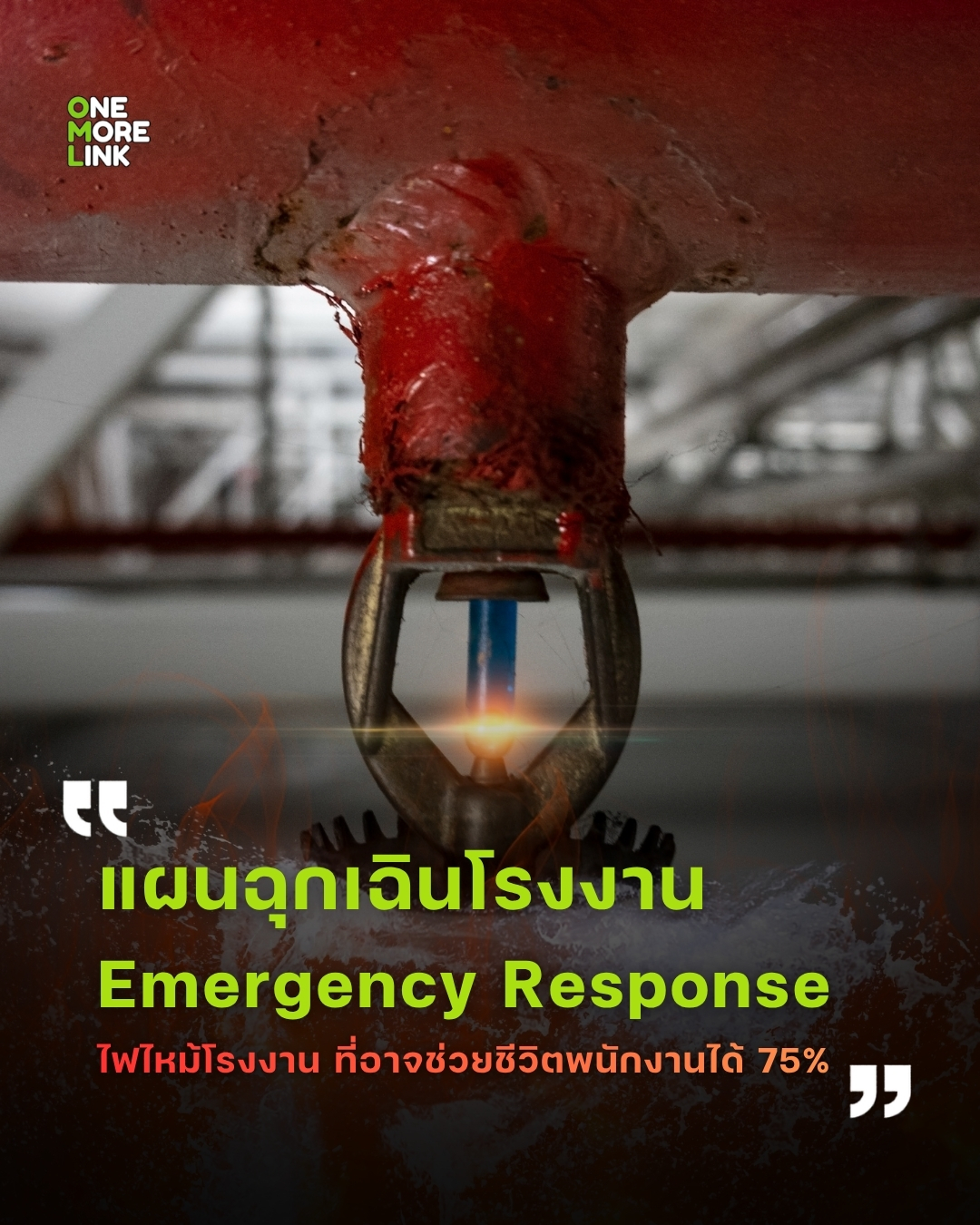
According to safety data, having an effective emergency response plan can reduce fire-related fatalities by up to 75%, while industrial facilities face a 40% higher fire risk than general buildings, based on OSHA 2024 statistics.
In Thailand, ministerial regulations require employers to ensure that at least 40% of personnel in each department receive basic firefighting training. However, many factories still fail to comply, leading to major incidents such as the Lat Krabang factory fire, which forced the evacuation of residents within a 200-meter radius and required more than 15,000 liters of firefighting foam to control the blaze in the basement area.
A proper Emergency Response Plan should cover five key steps:
- Emergency notification and alarm activation
- Situation assessment
- Organized evacuation procedures
- Personnel headcount and accountability
- Coordination with external emergency agencies
In addition, emergency plans must address fire outbreaks, explosions, chemical spills, and other emergency situations that could impact employee safety. The plan should also clearly define escalation procedures when internal response teams are unable to control the incident.
Regarding safety equipment, fire extinguishers should be installed no more than 20 meters apart and inspected every six months. Firewater systems must also be capable of supplying water continuously for at least 30 minutes.
Finally, establishing a clear Fire Warden team, conducting regular evacuation drills, and defining both primary and secondary escape routes on every floor are essential measures that every factory must implement and continuously improve to ensure the highest level of safety for employees and surrounding communities.